Simple Fermented Hot Sauce
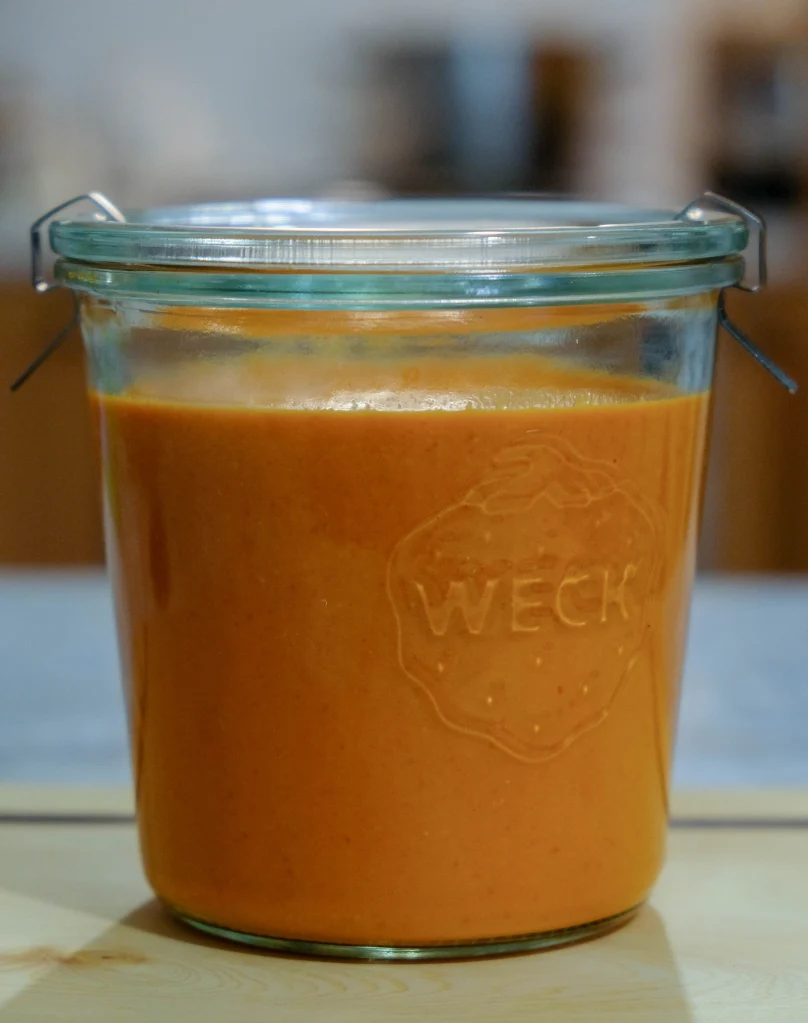
Hot sauce comes in many different guises. There are endless ingredients and ways to prepare hot sauce. Unsurprisingly, I’m most interested in a naturally fermented hot sauce. This is a simple recipe which’ll be ready to eat in a week (most of that time is waiting for the chillies to ferment).
Why make your own hot sauce?
Why should you bother making your own hot sauce when so many are available?
-
You can tailor the heat to your particular tolerance level. You have complete control over the chilli you put in the sauce and thus the resulting heat. Refer to the table further down to choose the chilli that is right for you.
-
You can create a hot sauce with specific flavours you love. You can tailor the recipe to your tastes, from a sauce focusing on the chilli flavour to a garlic forward sauce.
-
It gives you an excuse to grow your own chilli to add to your hot sauces. I love growing plants and am looking for any excuse to grow a new plant. Luckily, in Melbourne, chilli grows quite well through the summer months.
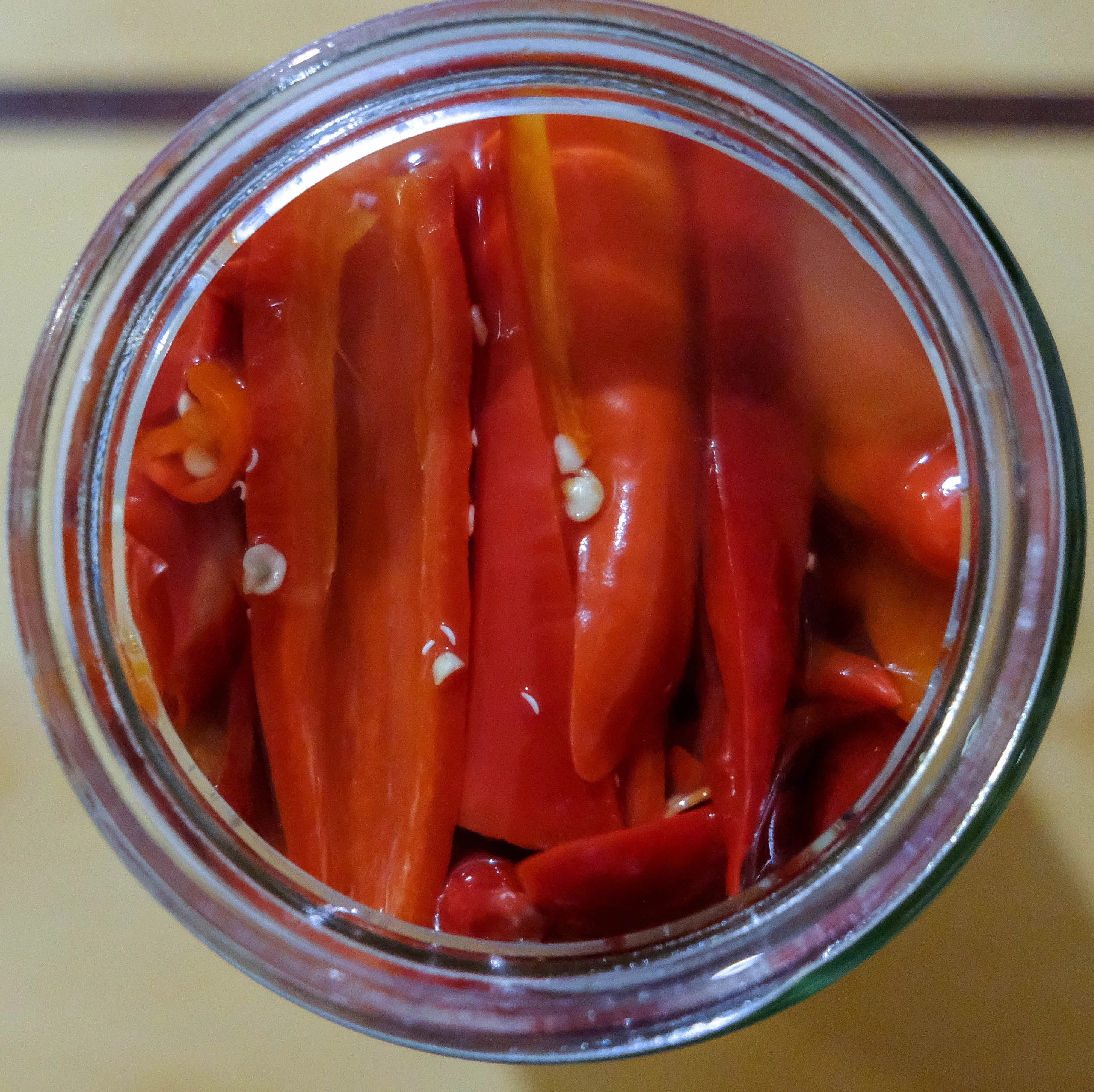
Why ferment the chilli first?
Of course you can make wonderful hot sauce without fermentation. That said, there are two main reasons I always tend towards a fermented sauce:
- I love the flavour that fermentation brings to the sauce. In my experience, this flavour pairs excellently with hot sauce. It gives it a uniqueness that I’ve not yet found in commercial hot sauces.
- There are well documented benefits to fermented food which I won’t cover here but are a big plus for me.
The fermentation method
Fermenting chilli is quite simple. There are however a few things to consider to ensure success.
The first decision you will need to make is whether you ferment your chilli whole or as a ‘mash’.
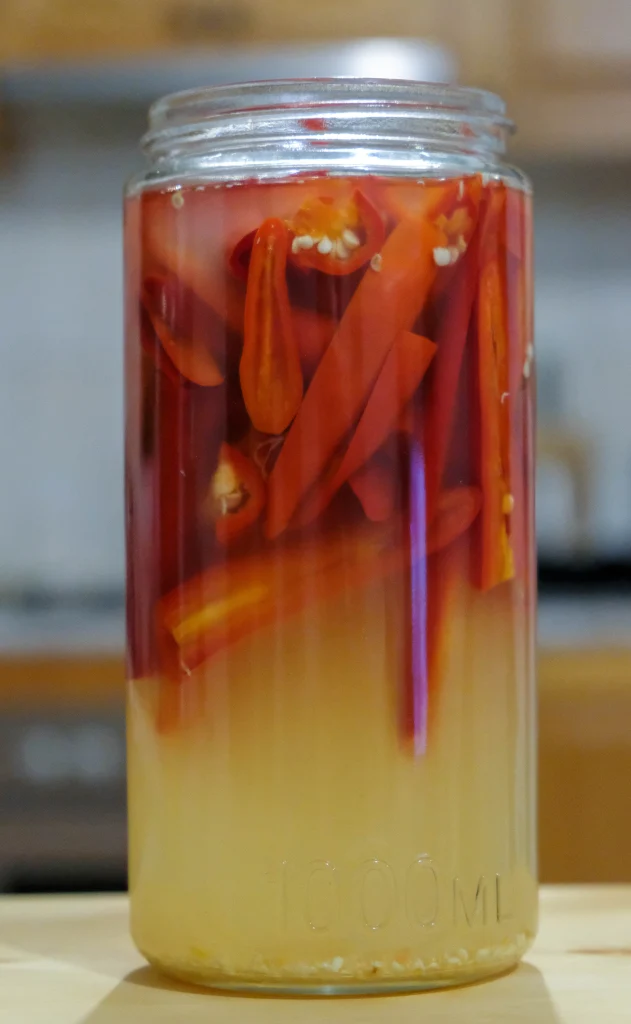
Whole: This is a simple method where you cut off the stem, cut the chilli in half, add to a jar and fill with brine.
Mash: Remove the stems from the chilli and add them to a food processor. Blitz them up and add them to a jar with a specific amount of salt.
This recipe will focus on whole fermented chilli as this is a simpler method in my experience. I will be posting a recipe for a ‘mash’ based hot sauce with a more detailed comparison between the two methods.
What chilli should I use?
Making your own hot sauce gives you the liberty of being able to adjust the heat to be perfect for you. Below is a table which lists some common chilli and their heat levels. Check out this much more comprehensive list by PepperScale. Remember when choosing the correct ones for your sauce, you can use a mixture to get it just right. You can also add capsicum if you want to dilute the heat of a particularly spicy chilli.
| Chilli | Min heat (SHU) | Max heat (SHU) |
|---|---|---|
| Poblano | 1,000 | 1,500 |
| Jalapeno | 2,500 | 8,000 |
| Fresno | 2,500 | 10,000 |
| Serrano | 10,000 | 23,000 |
| Cayenne | 30,000 | 50,000 |
| Habanero | 100,000 | 350,000 |
| Ghost | 855,000 | 1,041,000 |
Note: The heat of a chilli is measured in Scoville Heat Units (SHU).
Resources
- Fermentation FAQs: This is a wonderful resource with many common fermentation questions.
- Hot sauce YouTube playlist: I love using YouTube as a resource to learn the basics of something. This playlist’s one I’ve put together with some of my favourite fermented hot sauce videos.
Recipe
What you’ll need
- Chilli
- Salt
- Water (preferably filtered)
- Garlic
- Spring onion
- Neutral oil such as Canola
- Distilled white vinegar
How to make it
Fermentation
- Wash the chilli under cold water to remove any particulate or debris.
- Cut the stalks off and slice the chilli in half lengthways
- Fill the jar with the sliced chilli seeds and all
- Fill up the jar with water leaving approximately 1cm head room at the top
- Pour this water into a bowl or jug and whisk in the salt till dissolved (we do it this way to reduce water wastage)
- Now refill the jar with the brine and screw on the lid. If using an air lock, fill it with some brine
- Leave it in a dark space with consistent temperature such as a cupboard or pantry
Making the sauce
- Slice the garlic and spring onions
- Heat up the oil and add the garlic and onions
- Gently toast until the garlic is light brown. Make sure you don’t overcook the garlic
- Strain the oil mixture making sure to reserve the oil
- Pour the contents of the jar through a sieve/colander ensuring to reserve the brine
- Add the chilli, vinegar and 60 grams of reserved brine to a blender along with the toasted garlic and spring onion
- Blend the chilli mixture for 30 seconds until smooth
- With the blender running, slowly stream in the reserved oil and let blend for an extra 30 seconds
- If you want your sauce to be shelf stable, check the pH at this point. If it is not acidic enough, add some more vinegar and blend to combine
- If you prefer a smooth hot sauce, pass the blended sauce through a sieve before bottling